Healing Journey Wellness
Rebuilding the patient experience and the systems behind it.
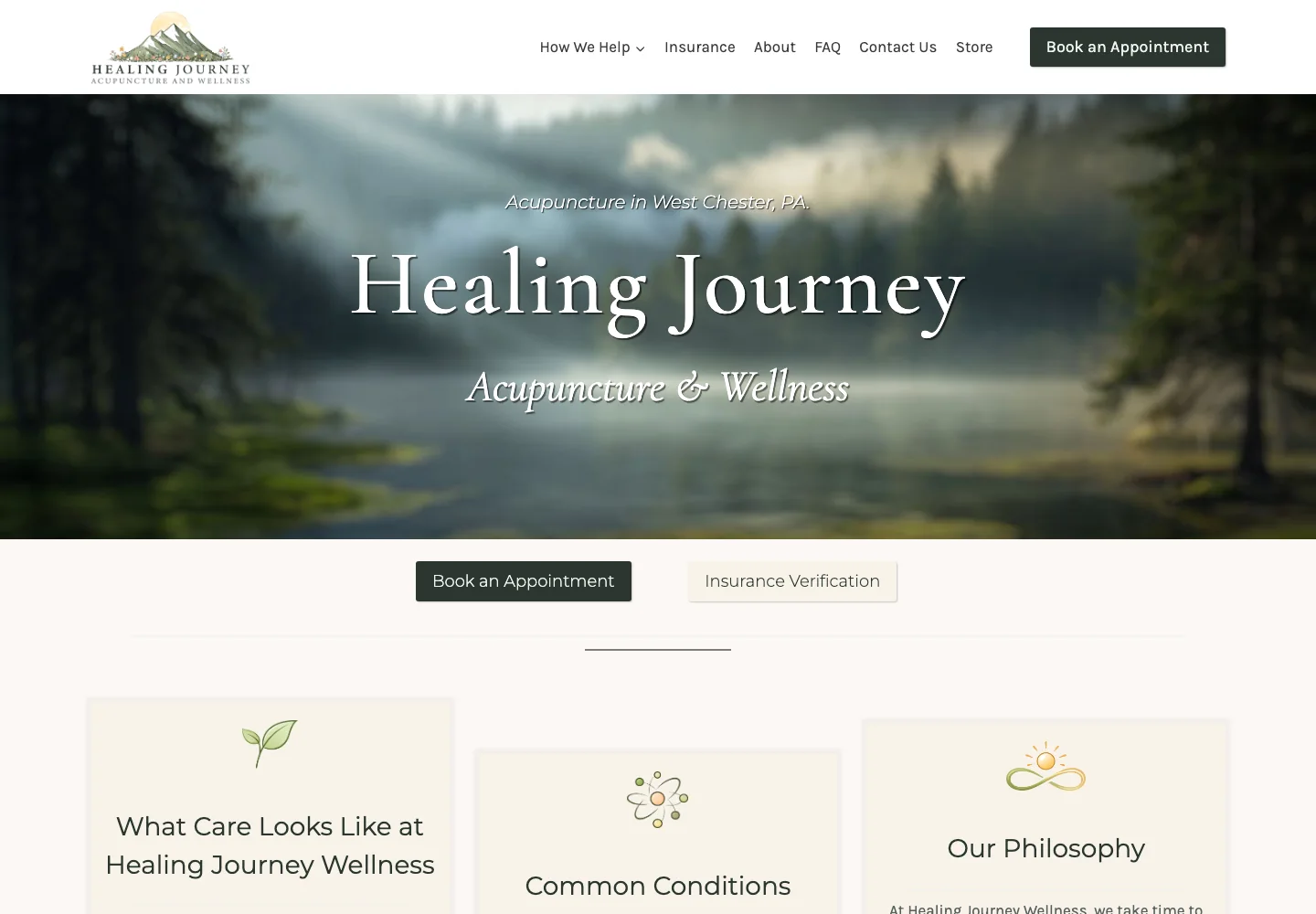
I modernized Healing Journey Acupuncture & Wellness across the patient experience, core systems, workflows, and digital operations. The work included rebuilding the website and customer journey, migrating the practice from Unified Practice to Jane EHR, standardizing Google Workspace across devices, and connecting insurance remittances and payments directly into the EHR.
Current state
Overview
A patient experience problem that exposed a broader operating problem.
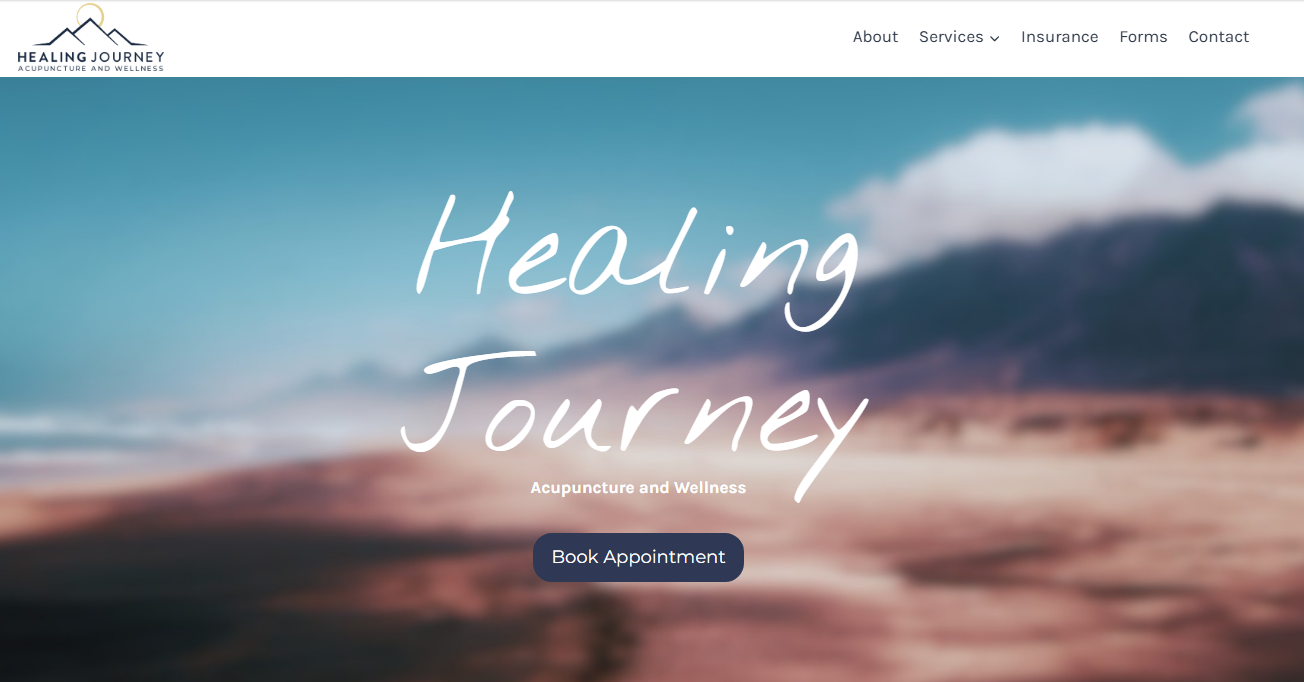
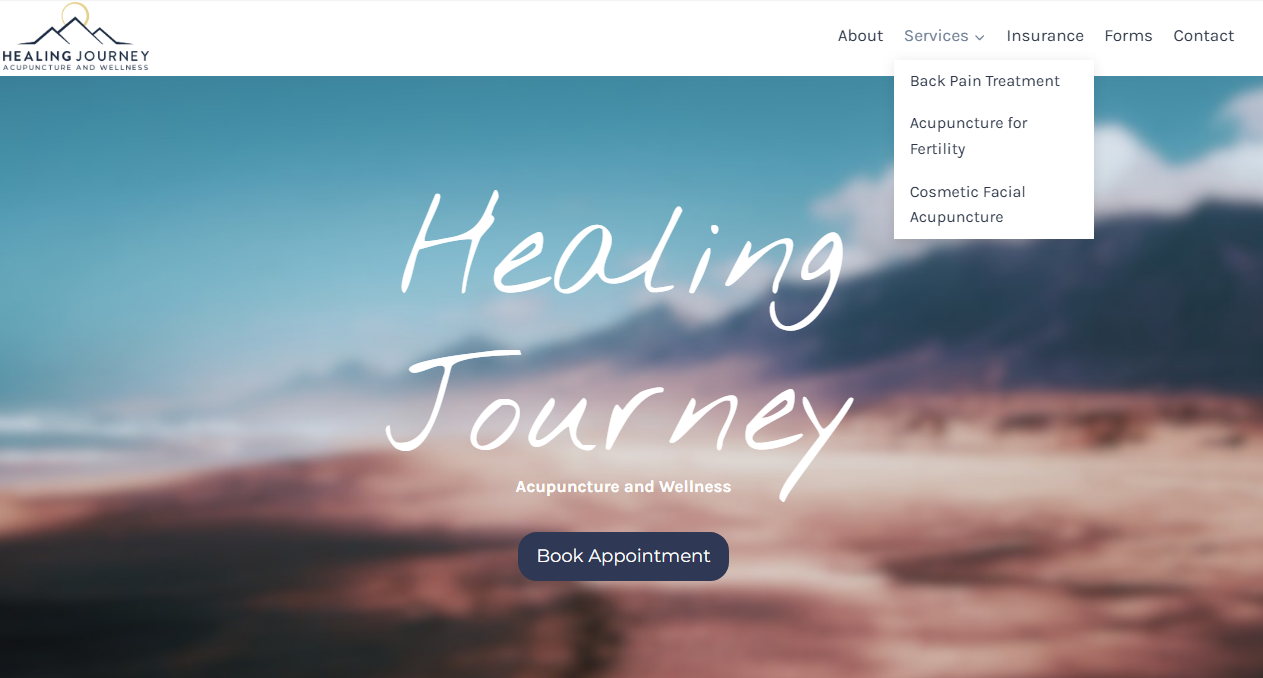
The inherited website contained useful information and years of credibility, but it asked prospective patients to do too much work. Important answers were buried in long pages, services were broadly framed, and the path from discovery to booking was inconsistent.
Healing Journey operates within a deliberate capacity model, so the objective was never growth at any cost. The work was about making the practice easier to understand, easier to access, and easier to operate: helping the right patients determine fit and take the appropriate next step, while simplifying the systems and workflows supporting that experience.
Measured after launch
More efficient discovery and stronger engagement.
+21%
Visits from organic search
+26%
Average engagement time
+72%
Search click-through rate
22.4 → 14.7
Average search position
After launch, organic visitors spent more time with the site and interacted more once they arrived. For the priority search acupuncture west chester pa, clicks increased 57%, click-through rate rose from 1.29% to 2.33%, and average search position improved from 10.95 to 9.33.
The challenge
The website was the visible part of a wider set of friction.
The original WordPress site reflected years of incremental additions. Behind it, day-to-day work also depended on aging systems and workflows that had evolved independently. The patient-facing experience and the operating environment both worked, but neither was as clear or connected as it could be.
- Broad positioning made local relevance less immediate.
- Long, information-dense pages competed with the primary patient journey.
- Booking and insurance actions lacked consistent priority.
- The visual system no longer reflected the current practice experience.
- Administrative work depended too heavily on specific devices and disconnected tools.
- EHR, insurance, and payment workflows had room to become simpler and more integrated.
Before and after · 01
From a content repository to a guided decision path.
Compare versions
Customer journey
Designing around the decisions a prospective patient makes.
-
01
Discover
Connect local and condition-based searches to a relevant page.
-
02
Orient
Establish location, specialty, and practice character immediately.
-
03
Understand
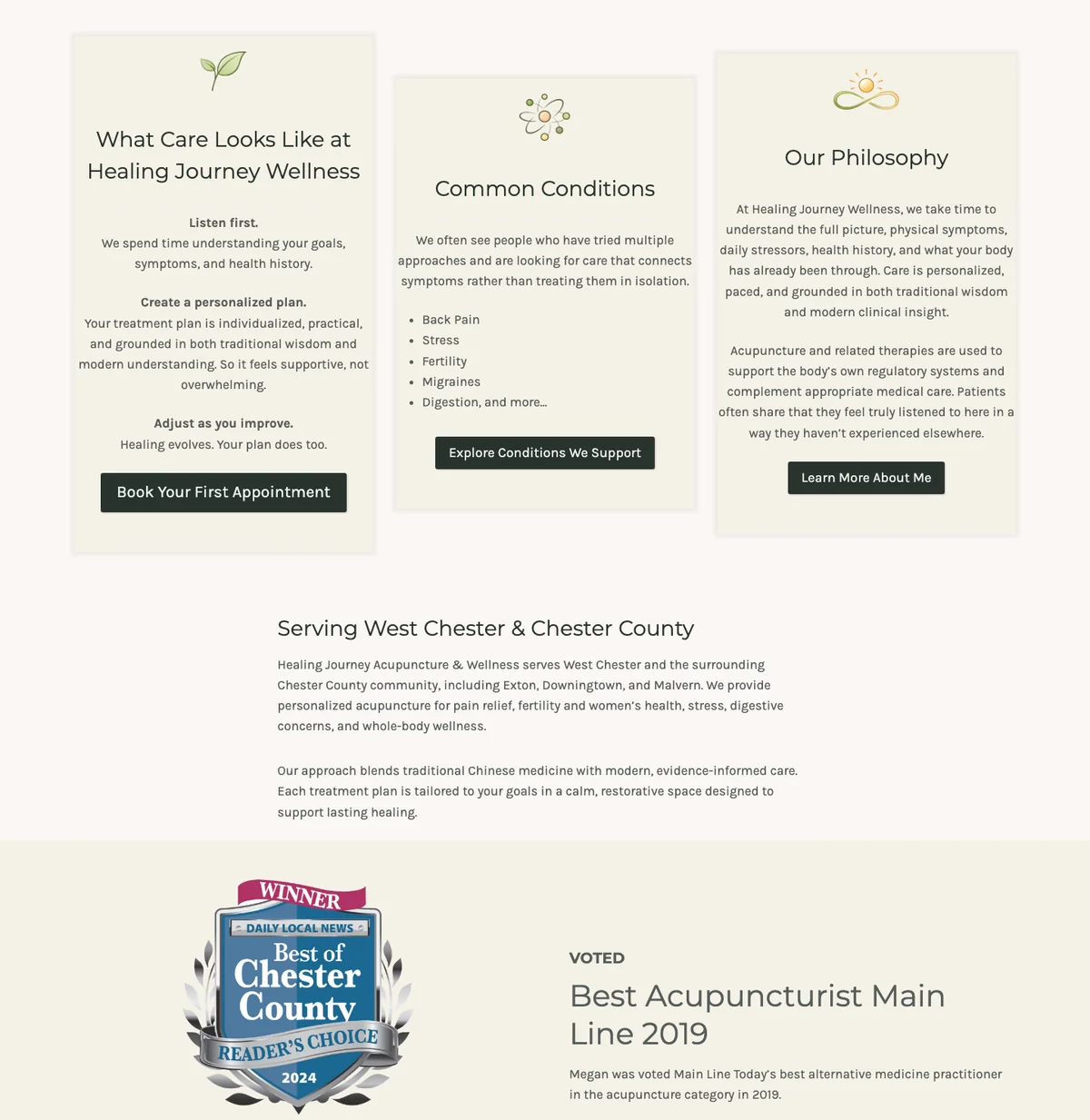
Explain what care looks like and which concerns the practice supports.
-
04
Trust
Use philosophy, credentials, awards, and practical information to reduce uncertainty.
-
05
Act
Make booking, insurance verification, contact, and shopping easy to find.
What changed
One practice, rebuilt across eight connected workstreams.
1
Reorganizing the experience
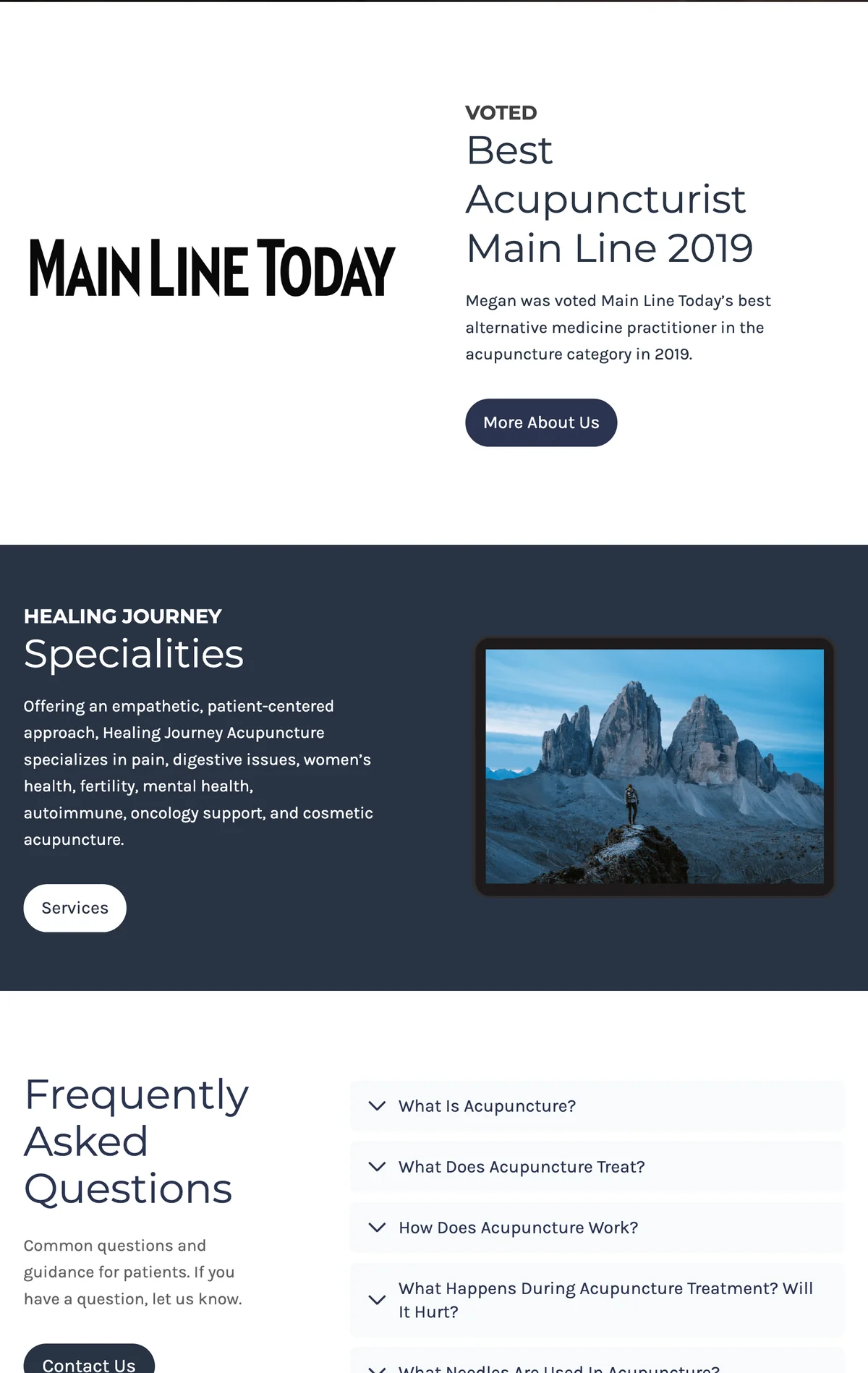
Rebuilt the site around patient questions, conditions, trust, local relevance, and clear next steps.
2
Rebuilding the visual identity
Introduced a calmer, more contemporary visual system that better reflected the actual care experience.
3
Making the language clearer
Rewrote the experience around what patients need to understand rather than how the practice had historically organized its information.
4
Making the next step obvious
Elevated booking, insurance verification, and contact actions at the points where patients are ready to act.
5
Improving local discovery
Built service and condition pages around relevant local searches while tightening the site's geographic focus.
6
Connecting the store
Brought the wellness store into the same brand, navigation, and customer experience.
7
Modernizing the EHR and payments
Migrated the practice from Unified Practice to Jane EHR and connected electronic insurance remittances and direct payments into the system.
8
Removing device-bound workflows
Standardized Google Workspace across three devices so administrative work no longer depended on being at a particular machine.
Before and after · 02
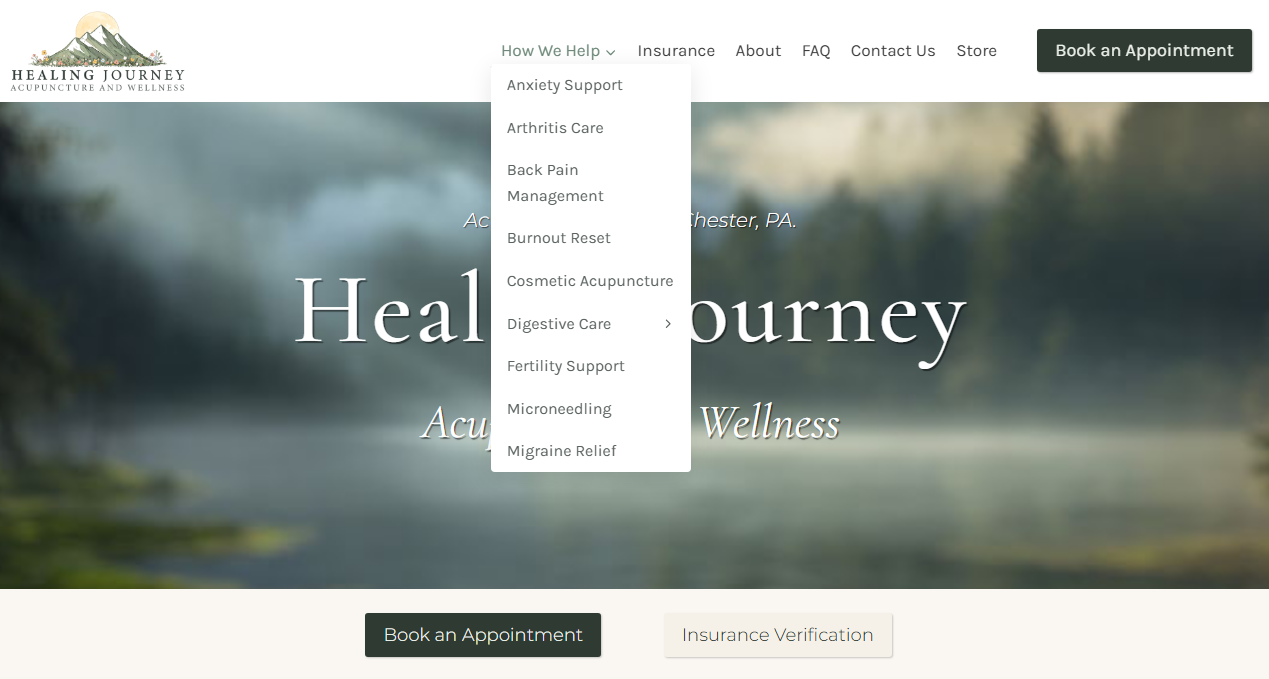
Reorganizing the site around the questions patients actually have.
Compare versions
Before and after · 03
Making it easier to find care by starting with the patient's need.
Compare versions
Implementation
Working from the business outward.
On the patient-facing side, I audited the inherited content, navigation, booking paths, and search footprint, then mapped the customer journey and rebuilt the site around it. In parallel, I migrated the practice from Unified Practice to Jane EHR, standardized Google Workspace across three devices, and connected the EHR to electronic insurance remittances and direct payments.
The common thread was reducing unnecessary friction. Information needed to be easier to find, systems needed to work together more cleanly, and routine work needed to happen without depending on a particular device or workaround.
What the data showed
A stronger experience, with a more focused search footprint.
Not every top-line search metric increased. Overall Google impressions and clicks declined as broad informational visibility contracted, particularly around a legacy cosmetic-acupuncture page. At the same time, the remaining search visibility produced a higher click-through rate, average position improved, priority local-query performance strengthened, and organic visitors engaged more deeply with the site.
That distinction matters for a capacity-constrained care practice. Maximum reach was never the objective. Relevance, trust, and an efficient path to the right next step were.
The result
A practice that is easier to find, easier to navigate, and easier to run.
Healing Journey now has a more coherent experience from first search through booking, insurance, payment, and ongoing administration. The visible redesign was one part of a broader effort to connect the systems, workflows, and decisions behind the practice.